A short course or training, taking place online and on location at a European partner institution.
Blended Intensive Programs (BIPs) combine virtual collaboration with a short-term mobility. Participants work together online before physically coming together at one of the involved partner institutions to complete their product(s), projects, or learning goals together on location. Alternatively, the online part might be also during or after the physical part in the form of additional online tasks, or follow-up activities. Because of the short duration of this type of mobility, a BIP can be organized within the context of one particular academic course, which makes the BIP an accessible way for teaching staff to organize collaborative projects with students and staff from other institutions. BIPs also offer inclusive opportunities for students who face challenges with international mobility, as a short trip is less expensive and takes less planning than a long-term mobility.
While BIPs are often organized in an academic context for students, they can also be geared towards staff members, in which case the BIP would entail a short training program for academic or administrative staff which includes online collaboration, followed by a physical mobility for further training on location.
Read more
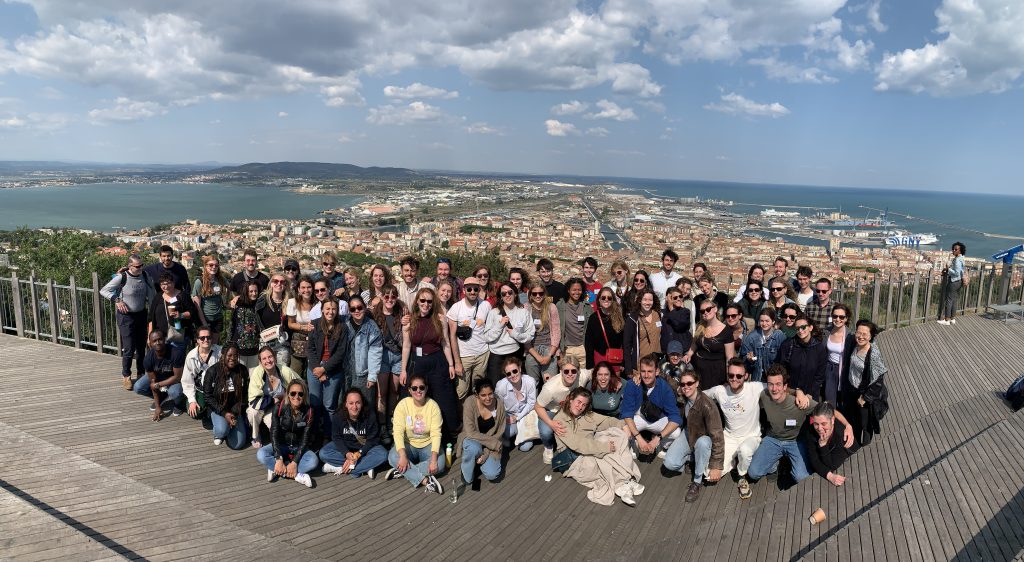
For CHARM-EU, BIPs play a significant role within the alliance’s Joint Master program Global Challenges for Sustainability (MGCS). Since the launch of the MGCS program, several BIPs have been successfully implemented, focusing on themes such as sustainability, global challenges and interdisciplinary cooperation. BIPs have been used as a means to let students who usually see each other only in the virtual classroom, come together on location to work together intensively for a short period of time. For a detailed overview of the implemented BIPs within the program, please refer to the Mobility Handbook.
Several BIPs for other target groups have also been organized in the context of CHARM-EU. From skills-based training for PhD candidates, to thematic ‘hackathons’ for Higher Education staff members, these programs not only enhance individual learning but also provide a platform for institutional collaboration, paving the way for future joint initiatives across the alliance.
What does a BIP entail?
Blended Intensive Programs (BIPs) are a core component of the Erasmus+ 2021-2027 framework, designed to modernize and expand international mobility opportunities. If a short program is designed according to the Erasmus+ definitions for a BIP, then grants from the Erasmus+ program can support the organization of the BIP as well as the mobilities of participants (if local Erasmus+ budgets allow). BIPs are developed and implemented by a minimum of three universities from different Erasmus+ program member countries, integrating virtual/online learning with a physical mobility that lasts between 5 and 30 days.
Blended: collaborating online and on location
The BIP has a dual-format structure (online and in person), which ensures academic continuity, maximizes engagement and allows for greater participation. Participants in the BIP get to know their counterparts from the other universities by meeting them online and working together digitally in groups. BIPs can enhance the digital skills and intercultural skills of the participants, thus contributing to their employability. Because the BIP culminates in a physical meeting (involving travel to another European country, experiencing the culture, etc.) the BIP contributes to the personal development of the participant, while the in-person meeting also creates an opportunity for collaborative learning activities on location such as for example an excursion, or group work on a physical product.
Intensive: an inclusive short program
Because a BIP constitutes an intensive program, with an embedded short mobility, it represents an inclusive opportunity for students and staff who face barriers to participate in traditional mobility programs (obstacles include higher costs and/or more extensive arrangements and time-investments to be made for long-term mobility). The BIP-format can thus contribute to broader goals regarding inclusive mobility opportunities. In addition: because one partner in the BIP will act as the Receiving Organization (hosting students and staff from the other partners during the physical mobility component of the BIP), this partner’s students will experience the benefits of internationalization at home: they do not have to be physically mobile in order to participate in an intercultural learning opportunity.
Why organize BIPs?
BIPs benefit various stakeholder groups, including students, PhD candidates, academic staff and institutions, by promoting international collaboration, enriching academic programs, and fostering the development of professional skills. Find out below how various stakeholders within your organization, as well as your organization itself, could benefit from organizing a BIP.
Participants
BIPs allow participants to broaden their academic horizons, and to develop essential intercultural, linguistic, and digital competencies. Due to the intensive collaboration with participants from other institutions, students and/or staff members collaborating in a BIP can build an international professional network. Because BIPs are more accessible than traditional long-term mobility (see detailed description above), these important benefits of BIPs can also be experienced by students and staff members who might not otherwise be able to participate in international exchange.
Academics/teachers
For academic staff, BIPs provide a platform for experimenting with new teaching methods, collaborative course design, and transdisciplinary education. Educators also benefit more generally from knowledge exchange, exposure to diverse teaching environments, and participation in transnational academic communities. Due to the close collaboration with academics and support staff from other European institutions which a BIP entails, these short intensive programs foster durable relationships between international colleagues. In addition, the practical experience of organizing an international learning opportunity provides staff members with a springboard for future collaboration on projects which include mobility and/or international exchange.
Institutions
BIPs provide institutions with a structure for organizing short international experiences, and a way to support these types of exchanges with Erasmus+ funding. BIPs help universities to increase mobility participation among their staff and students, according to the European Commission’s goal of achieving a 50% student mobility rate by 2030. BIPs also contribute to curriculum innovation, fostering interdisciplinary collaboration, and strengthening ties with international partners. Institutions can use BIPs to offer inclusive (short-term) mobility options and/or internationalization at home, thus increasing the accessibility of international opportunities at their organization, aligning with Erasmus+ priorities.
Alliances
Alliances can offer learning benefits through BIPs to their students by organizing BIPs which utilize the expertise of (academics at) multiple partner institutions. As such, BIPs can offer a relatively accessible way for students from each partner to benefit from the knowledge of teachers and researchers working across the alliance. Staff BIPs (also see: Staff Mobility) offer opportunities for staff members from different partners within an alliance to share best practices and collaborate on streamlining inter-institutional processes.
SOMETHING FOR YOU TOO? EXPLORE THE OPPORTUNITIES!
A Blended Intensive Program (BIP) offers a unique opportunity for academic staff to engage in cross-institutional collaboration as they work on designing a short program for their students. Staff members can also design BIPs for colleagues, in order to offer an accessible training program with an online and in-person component.
Each BIP follows a structured process, beginning with curriculum alignment, consortium formation and funding allocation, followed by the selection of participants, academic preparation and program delivery. If you are an academic staff member interested in implementing a BIP, or an institutional coordinator seeking to enhance your mobility offerings, learn more about how you can get involved in the BIP initiative by reviewing the resources and Step-by-Step Guide below.
Since CHARM-EU aims to offer more BIP-opportunities to learners across the alliance, there is currently a Call for BIP-proposals which you can use as a springboard to receive funding for organising a BIP. This Call for Proposals is meant for the academic year 2025-2026, but please check back in autumn for possible new initiatives in 2026-2027.
WOULD YOU LIKE TO CARRY OUT A SIMILAR PROCESS YOURSELF? SEE OUR GUIDES!
| Step | Action | Who Should Be Involved? | Resources / Support |
| Step 1 | Start by reading the Interactive Mobility Handbook and contact your International Office/Erasmus Office to discuss available Erasmus+ Blended Intensive Programme (BIP) opportunities, funding possibilities, and administrative procedures. | International coordinators | Mobility Handbook, chapter “Blended Intensive Programmes” European Commission: Blended mobility implementation guide for Erasmus+ higher education mobility KA131 EAIE Blog: 5 tips for running Erasmus+ Blended Intensive Programmes |
| Step 2 | Explore suitable BIP opportunities within your curriculum or department and assess institutional readiness, including academic capacity, student interest, and possibilities for virtual collaboration. | International coordinators, academic staff, department heads, international offices | Call for BIP-proposals |
| Step 3 | Identify and connect with suitable partner universities within the CHARM-EU network and jointly design the BIP, including virtual and physical components, learning outcomes, assessment methods, and credit recognition procedures. | Academic staff, partner universities, international coordinators | CHARM-EU Alliance members |
| Step 4 | Coordinate the Erasmus+ BIP application and organisation process, including funding arrangements, responsibilities, student recruitment, participant selection, and mobility preparation. | International offices, academic staff, financial officers, student advisors | |
| Step 5 | Implement the BIP, monitor participation and academic progress, and complete evaluation, assessment, documentation, and credit recognition procedures after the programme. | BIP coordinators, academic staff, international offices |
For teaching staff wanting to organise a BIP:
If you are interested in developing an Erasmus+ BIP from scratch, or in joining to organise a BIP that is being proposed/initiated by a partner institution, please contact your institution’s Erasmus+/BIP coordination office at an early stage for guidance on funding, timelines and administrative procedures.
For (prospective) BIP participants:
For the institution organising the BIP, it is important that participants are registered as Erasmus+ participants by their home university. If you are interested in participating in a BIP as a learner (i.e. follow a staff training which is offered in the form of a BIP; participate in a BIP for PhDs; etc.) it is therefore important to contact the Erasmus+ Office of your home institution and ask about the possibilities to receive an Erasmus+ Grant (or being registered as a Zero Grant participant) for the BIP of your interest.