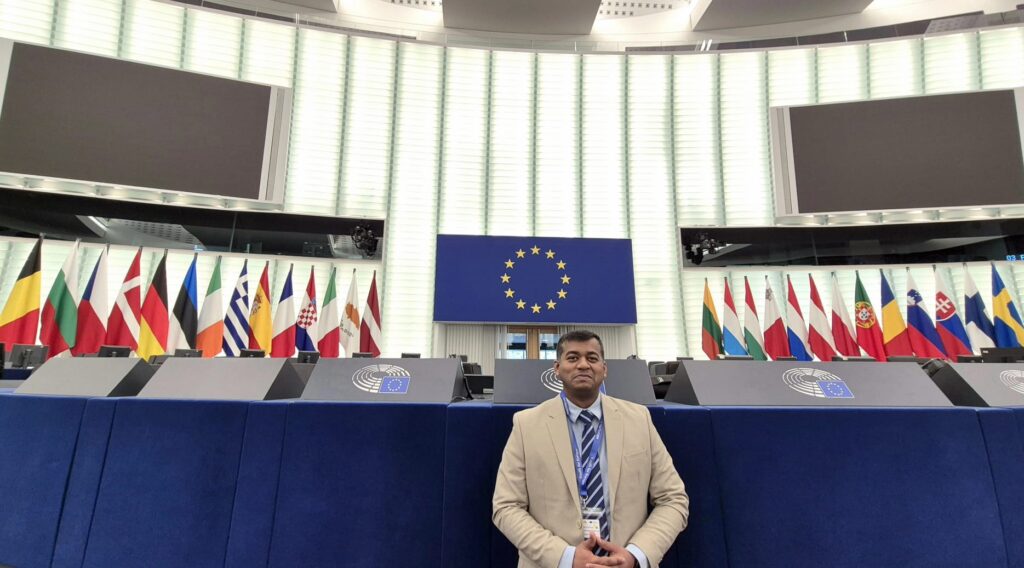
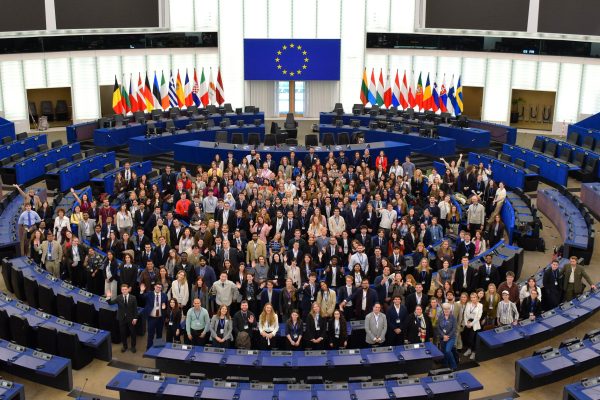
This April, a delegation of CHARM-EU student representatives joined students from across the continent to debate, collaborate, and draft policy recommendations on the most pressing challenges facing Europe today. From sustainability to digital transformation, they brought the voice of the CHARM-EU generation to the European Parliament.
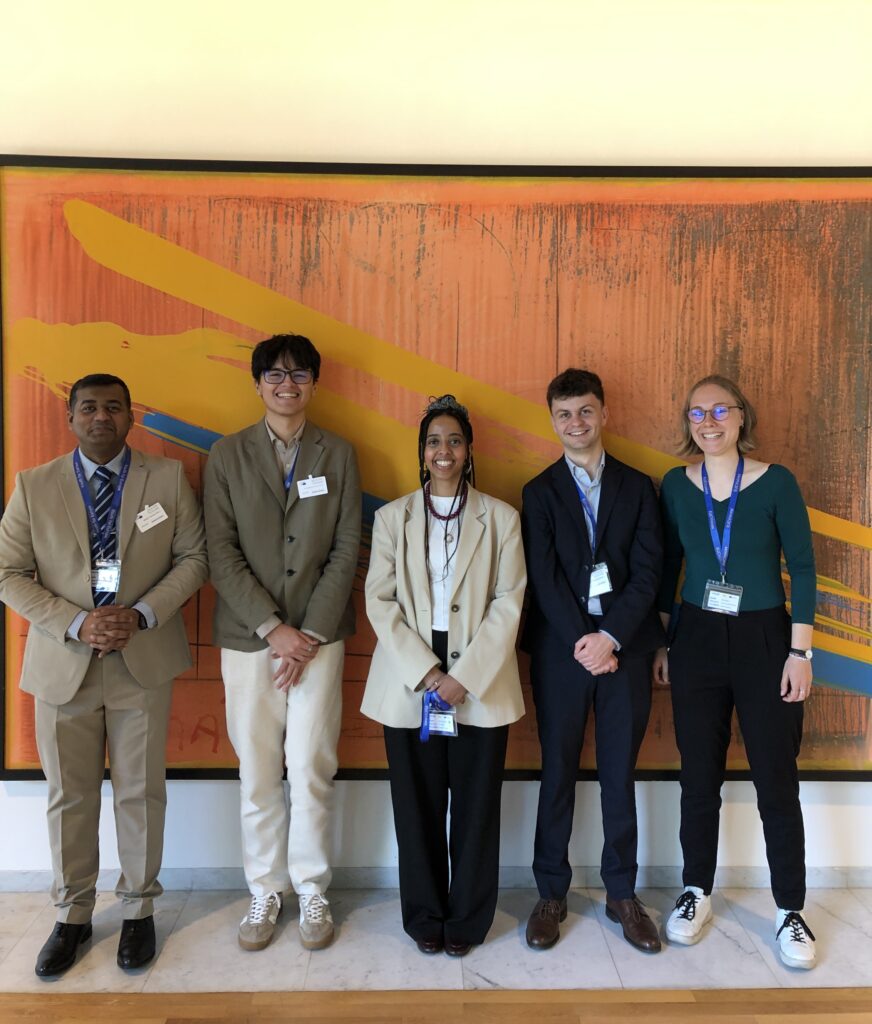
We asked them about their experience collaborating with students from other European Universities, their panels, the ESA’s impact on the future of Europe and advice for students looking to participate in the future.
Meet our CHARM-EU students:
- Diamons Mesele, Utrecht University – Panel 1: Strengthening democracy, engaging citizens: How can the EU bridge the gap between its institutions and its citizens to build trust and foster civic participation?
- Vincent Moreu, University of Montpellier – Panel 2: Scaling the circular economy: How can the EU overcome uneven progress and encourage change across sectors and societies?
- Felicia Müller, University of Würzburg – Panel 2: Scaling the circular economy: How can the EU overcome uneven progress and encourage change across sectors and societies?
- Piero Alessandro Toribio, University of Barcelona – Panel 3: Aligning budget with impact: How can the Union’s funding rebalance and adapt to the social changes?
- Ciara O’Brien, Trinity College Dublin, Panel 3: Aligning budget with impact: How can the Union’s funding rebalance and adapt to the social changes?
- Mehdi Hassan Milu, Abo Akademy Finland, Panel 4: Europe moving together: How can the EU develop an inclusive public transport system?
- Evelin Kotroczó, ELTE, Panel 6: Educating without borders: How can the EU support universities in fostering interdisciplinarity?
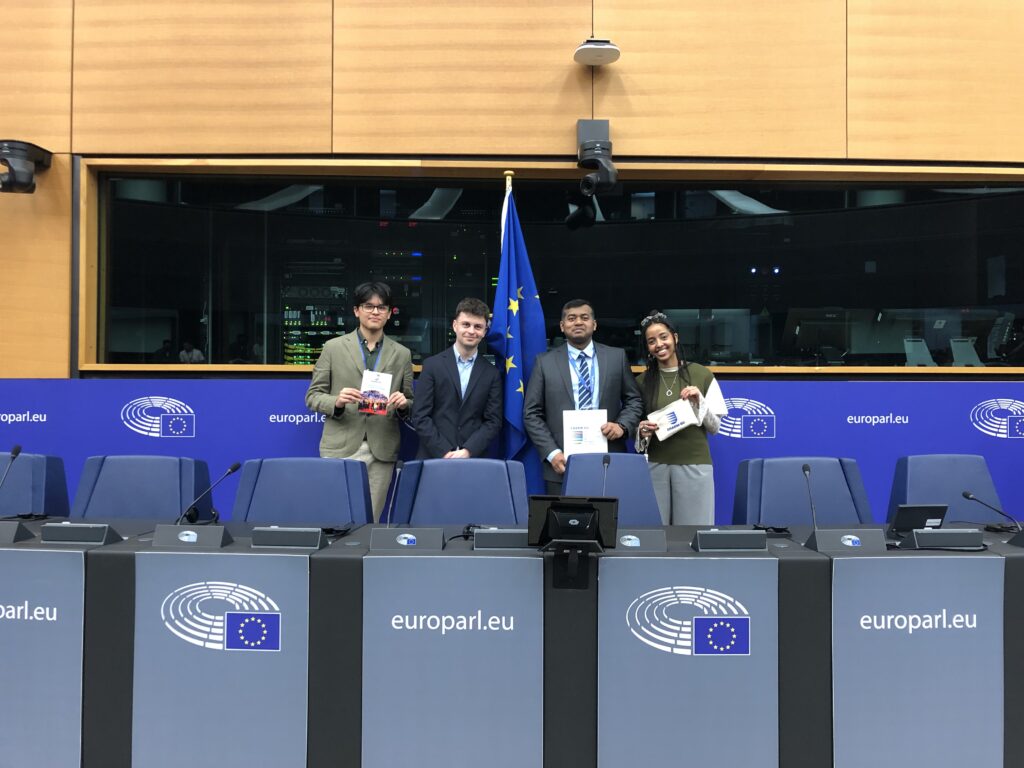
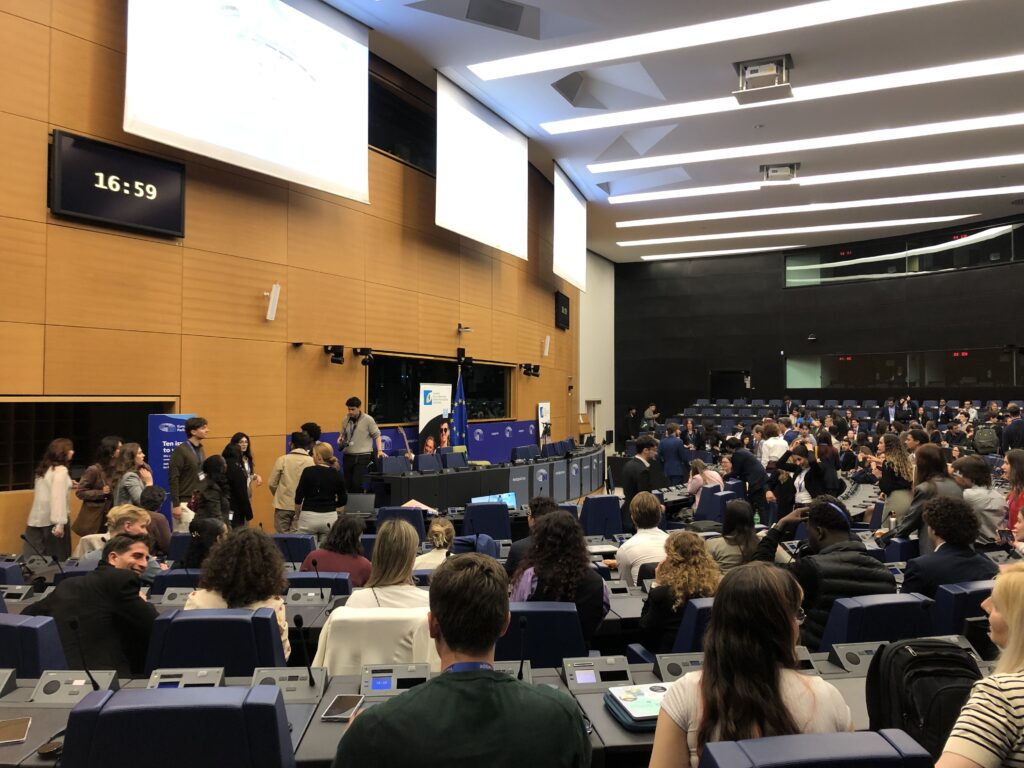
From theoretical knowledge to practical recommendations
Felicia is currently pursuing a master’s degree in political and social sciences with a focus on sustainability at the University of Würzburg. For her, panel 2 (Scaling the circular economy) was the perfect intersection of her interests:
“Sustainability and the circular economy are critical topics, not just in Germany but globally. During the panel, we dove deep into how we can transform current economic models into something more regenerative. What made me so passionate about this specific track was the realization of how much the EU has already set in motion.”
She tells us that working on this panel allowed her to apply the theoretical knowledge to practical recommendations, focusing on how we can improve what already exists rather than just reinventing the wheel.
Felicia tells us that for her, the highlight of the assembly was collaborating with students from across the continent:
“We come from such diverse academic backgrounds and nationalities, which adds an incredible layer of depth to every discussion. Before meeting in Strasbourg, we spent three months working online. Admittedly, that phase felt a bit distant and logistical challenges like scheduling were tough. However, transitioning to face-to-face interaction changed everything”
For Felicia, this collaboration taught her that bridging national differences isn’t just about speaking the same language; it’s about actively dismantling barriers and finding common ground through intense, respectful debate.
“It moved the concept of “European unity” from a theoretical study point to a practical, lived reality.”
One of Felicia’s biggest takeaways is that European legislation is incredibly complicated. Nonetheless, she sees ESA26 recommendations as an acting catalyst for strengthening democracy.
“By showing that young citizens can navigate complex political processes and provide actionable solutions, we are proving that the future of Europe is collaborative”
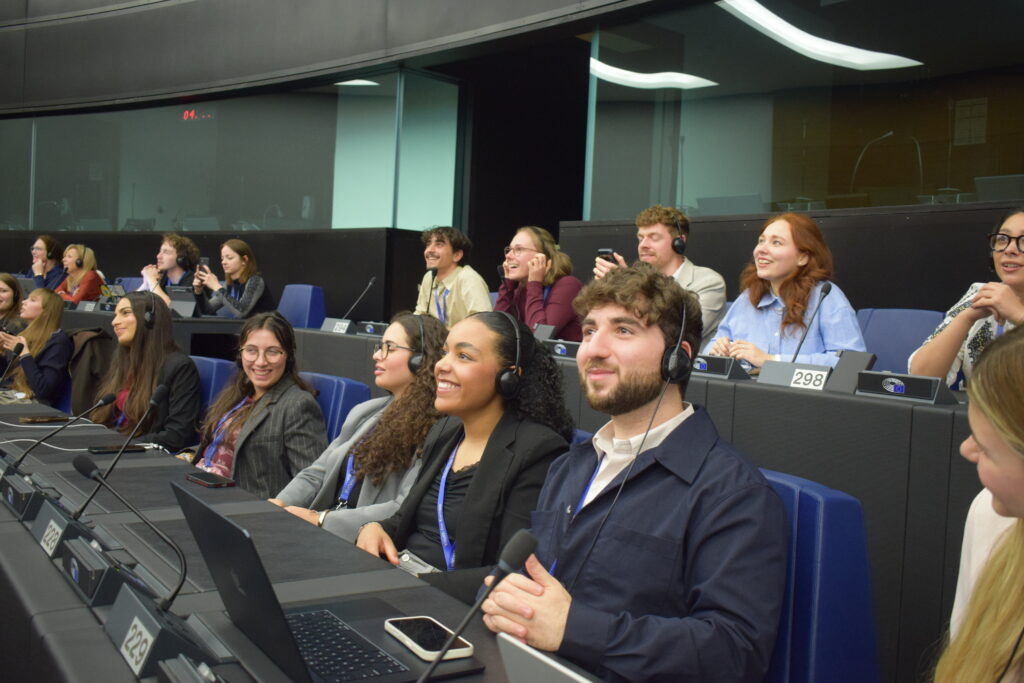
On the experience of collaborating with students from other
European Universities
For Piero, collaboration with international students made current issues feel real beyond articles and essays:
“That gap between shared values and lived experience is something I’d read about before. Feeling it in an actual conversation was something else” (…) “One person’s obvious answer was another person’s red flag. Europe is more varied than I thought going in, and the variation isn’t always where you’d expect it”.
He recalls a conversation that he had with students from Kosovo and Armenia about democracy:
“We all agreed on the principles, but the examples we reached for were completely different, shaped by histories I only half-knew”
Piero’s advice focuses on the importance of conversations and exchanging ideas with other students:
“Come prepared to disagree with people, and to be wrong. That sounds obvious, but it’s easy to treat these events as networking rather than as actual intellectual exchange. The conversations that stuck with me were the ones where someone said something that genuinely surprised me, or where I had to work to explain a position I’d taken for granted”
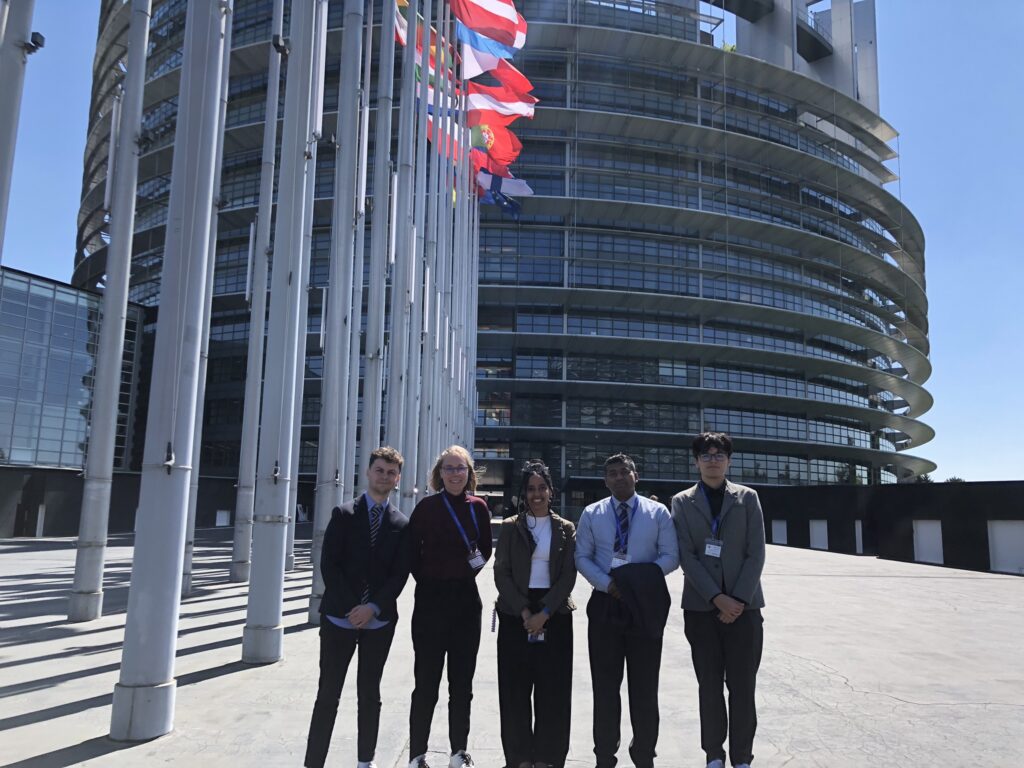
An opportunity to include youth voices in European politics
For Ciara, ESA has been an amazing opportunity to understand how the EU institutions come together to work for EU citizens.
“I am deeply passionate about the inclusion of youth voices in politics. Young people are the leaders of tomorrow, but we are also leaders of today. Our talented panel participants are using local knowledge from volunteering, studying and leading communities to create concrete political policies.”
In her opinion, ESA allows young students to scale up their work to an international level.
“We have found a network of similarly passionate peers, learned practical skills for policy writing, and built confidence in communicating with EU institutions. I am excited to see what all my fellow ESA participants do next! “
On how a collaborative experience can create a perspective shift
Mehdi highlights how valuable it was for him to encounter the unique perspectives of each student, shaped by their academic background, culture and national context:
“Coming from a background in circular economy, technology and engineering, I initially approached topics from a more technical standpoint. However, through these exchanges, I realized how deeply interconnected many European challenges are with social inclusion, regional disparities, and governance structures.”
Mehdi aligned strongly with the panel he participated in – Europe Moving Together. For him, the combination of the different problem dimensions was particularly meaningful:
“Being actively involved in this panel allowed me to both contribute and learn, and it strengthened my interest in working at the intersection of engineering, sustainability, and policymaking”.
For Mehdi, beyond the recommendations themselves, he believes that the true impact lies in the participants who will carry these ideas forward into their future careers and continue contributing to European development.
His advice is simple but essential:
“Embracing the experience with curiosity and enthusiasm will make ESA, a truly rewarding and unforgettable journey.”