Launching Innovation and Connecting Regions
The core goal behind CHARM-DEN 2026 was to give promising sustainability-oriented projects from across CHARM-EU an opportunity to present their ideas to an international panel, receive constructive feedback, and build connections beyond their local networks. By bringing together the entrepreneurial potential within alliance universities, the initiative aims to help teams take their next steps toward practical application. CHARM-DEN also forms part of a wider Incubator Hub Network approach, connecting existing expertise and support structures across the alliance so that teams can leverage the diverse strengths of different regions.
Bridging Research and Societal Impact
To strengthen the connection between academic research and real-world impact, this year’s edition featured a deliberately redesigned format. Previous editions separated early-stage projects from mature startups, but the 2026 event removed that distinction to focus explicitly on young projects and research teams still exploring how their findings could translate into a business.
A prime example is ReTropy from the University of Würzburg, a team developing a physics-backed approach to make AI training more efficient and decision-making more understandable. While still shaping their business model and value proposition, CHARM-DEN provides such researchers with access to entrepreneurial expertise, practical guidance, and networks of experienced startup advisers, including venture-capital professionals, helping them navigate the path from scientific discovery to societal impact.
Key Themes: Circularity, Accessibility, and Social Value
Across all presentations this year, resource efficiency and circularity emerged as powerful central themes. Notable examples include ReHeatz, which focuses on recovering wasted heat; Remede Circular, which proposes keeping suitable medical devices and valuable materials in circulation; and FORMÆT, which presented modular art supports made from recycled ocean plastic.
Another major focus was accessibility and social sustainability. Projects like Helpers’ Net address the support needs of informal caregivers for cancer patients, while Betaalbaarlessen.nl strives to make driving practice more accessible using rented VR simulators. Across these diverse sectors, participating teams consistently connected environmental and social sustainability with concrete user needs, such as reducing costs and improving access.
What stood out most to the organizers was the sheer breadth of the projects and their close connection to practical problems, ranging from advanced research to ventures rooted in first-hand healthcare, education, and creative industry experiences. While the ideas themselves were diverse, all teams shared a common challenge: communicating their innovation clearly, convincingly, and in a way that highlighted both its impact and feasibility.
The CHARM-EU Pitch Guide
To support students, researchers, and future innovators in developing these skills, the CHARM-EU Pitch Guide was designed as a practical resource, created by CHARM-Eight, Work Package 15 with the support of Agence Universitaire de la Francophonie (AUF) as a funding body of CHARM-DEN 2025 , to help entrepreneurs (including students, PhD candidates, and researchers across CHARM-EU Alliance universities) master the key elements of delivering a clear, complete, and impactful pitch.
It combines core storytelling principles with essential communication techniques that outline a step-by-step pitch structure: from creating a compelling hook and defining the problem to presenting a solution and making a targeted call to action. It also provides actionable advice on body language, vocal eloquence, science popularization, and practice strategies to help presenters captivate their audience and confidently showcase their projects.

Rigorous Evaluation and Genuine Sustainability
The importance of these skills was also reflected in the competition’s evaluation process. When assessing the pitches, the jury considered not only the strength of the business idea and its sustainability contribution, but also the quality of the presentation and the team’s ability to respond effectively to questions. The result was a competition that rewarded both innovative thinking and the ability to communicate ideas with clarity and impact.
Ensuring genuine sustainability is integrated from the outset, starting when partner universities select their participating teams. Teams must explain their specific problem, their solution’s sustainability contribution, and the evidence supporting it. By considering environmental, social, and economic sustainability together, the event exposes these claims to scrutiny from an experienced jury, encouraging teams to make their reasoning transparent.
Celebrating Winners and Looking to the Future
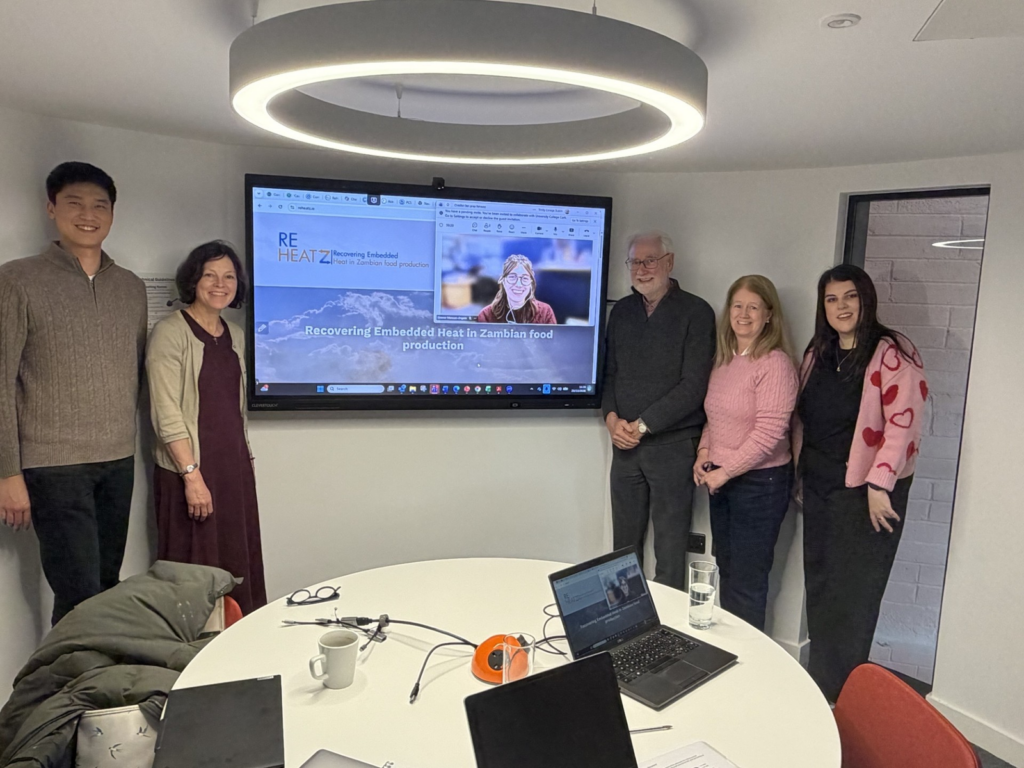
The winner of CHARM-DEN 2026 was ReHeatz, the Trinity College Dublin and Zambia collaboration that recovers industrial wastewater heat for food production to reduce emissions and operating costs. As winners, ReHeatz secured a comprehensive communication package featuring dedicated CHARM-EU website coverage, a written interview, and LinkedIn promotion.
Looking ahead, the ambition for CHARM-DEN is to build upon its established momentum as a shared stage for regional collaboration. While future editions will navigate organizational transitions and resource planning, key goals include broadening audience outreach, structuring post-event connections more effectively, and establishing lasting partnerships with external organizations and investors to provide long-term financial support and mentoring for participating teams.