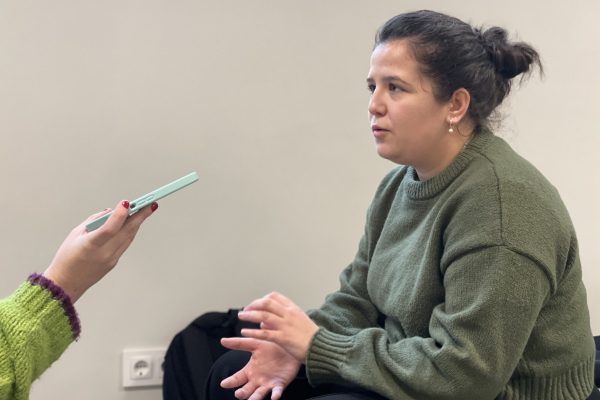
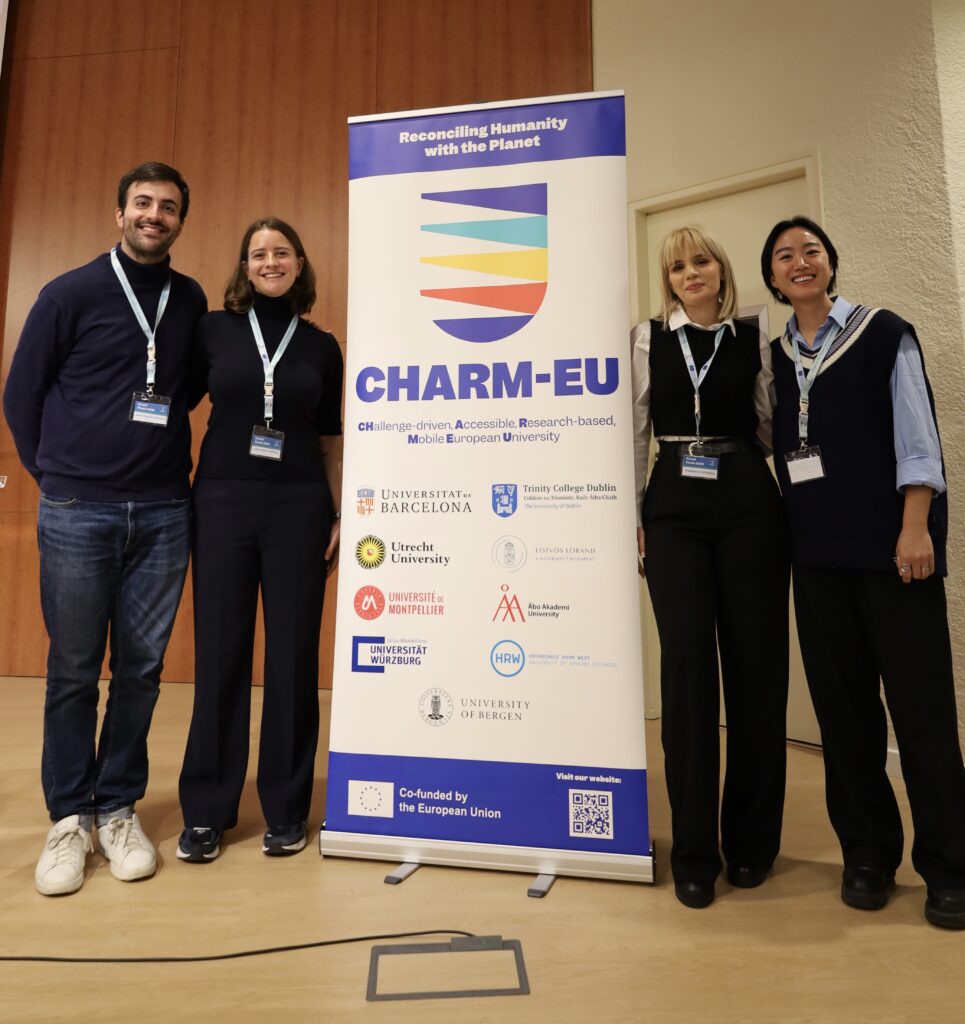
During the Grand Finale 2026, held on 27 and 28 January 2026 at the University of Barcelona, students from the 4th cohort of the master’s programme presented their capstone projects. We had the opportunity to engage in a discussion with Alba Graells from the Department of Agriculture, Livestock, Fisheries and Food of the Government of Catalonia.
Alba Graells represented the stakeholder for the challenge “Barrio sin despilfarro: Reducing Food Waste in the Metropolitan Area of Barcelona”, developed by students Koko Cheung, Lotte Henk Crombag, Vasilena Hristova, and José Miguel Sánchez Zaballa. The academic supervisor was Oscar Núñez (Universitat de Barcelona) and the second reader of the project Ingolf Steffan-Dewenter (Julius-Maximilians-University Würzburg)
Collaboration between academic and public institutions
Alba highlighted that one of the most appreciated aspects of the collaboration was the strong connection between academia and public institutions. This relationship enabled students to contribute fresh, alternative viewpoints that public policy technicians may not always have the opportunity to explore in their daily work. At the same time, students benefited from direct exposure to institutional realities, helping them better understand the complexity of public decision-making processes.
The focus on food waste—a priority issue at regional level—proved particularly impactful. Through the active involvement of students, the project helped establish a foundation for future actions in Catalonia. A key tangible outcome is the food hub book developed by the students, which is expected to be used in the coming weeks or months to support the creation of an open food hub at the Government of Catalonia. This tool aims to connect relevant actors and serve as a catalyst for moving from a local initiative towards a broader regional collaborative network dedicated to reducing food waste.
Collaboration with academic supervisors and partner universities was also highlighted as a major strength. The combination of perspectives—from public administration and academic supervision—proved especially enriching. Academic guidance helped students remain focused on locally grounded solutions, avoiding dispersion in such a wide and complex topic. The alignment of institutional and academic support significantly enhanced the learning experience and added clear value for students.
Unique design of the CHARM-EU Master’s in Global Challenges for sustainability
This experience also reflects the distinctive design of the CHARM-EU Master’s programme, which is structured in several phases: a general theoretical phase, thematic tracks (food, water and health sciences), an internship, and a capstone project. Compared to more traditional master’s programmes, CHARM-EU stands out for its strong stakeholder engagement and the diversity of its student body, bringing together learners from different universities and academic backgrounds. Its practical, challenge-based approach effectively connects academia with the real world and allows students to see their work translated into meaningful, real-life applications.
“I think it’s really valuable for students to work on practical solutions, because it brings academia closer to the real world and gives their work real meaning. In many master’s programmes, students don’t always see how what they do connects to their future careers. With the CHARM-EU master’s programme, students can experience the kind of work they might actually do in the future, for example in the public or food sector. It’s a great way to put academic knowledge into real-life practice.” Alba Graells, Department of Agriculture, Livestock, Fisheries and Food of the Government of Catalonia.
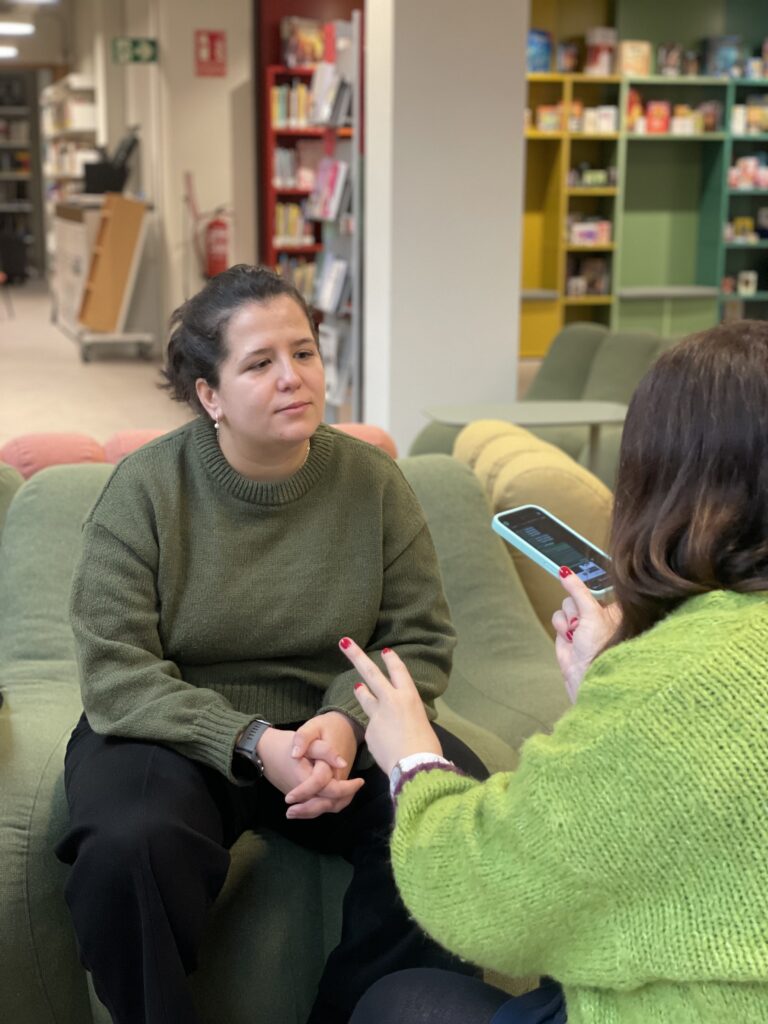
Finally, Alba explained that looking ahead, there is strong interest in continuing this collaboration. Implementing the food hub book with regional actors in Catalonia is a key next step, alongside exploring opportunities to involve future CHARM-EU students in further developing the food waste project. More broadly, the experience underlines the importance of sustained collaboration between public institutions and universities to address complex societal challenges through education, innovation, and partnership.
Do you want to learn more details about the captsone project “Barrio sin despilfarro: Reducing Food Waste in the Metropolitan Area of Barcelona” and other CHARM-EU capstone projects from the 4th cohort of the Master’s in Global Challenges for Sustainability?
Interested in this master’s programme? You will be able to work with interesting stakeholder while developing a sustainable project. Do not miss this opportunity! Applications are open!