In the joint MSc programme Global Challenges for Sustainability challenge-based learning is one of the core educational principles. It is a student-centred approach that emphasizes critical thinking, real-world problem solving and active engagement.
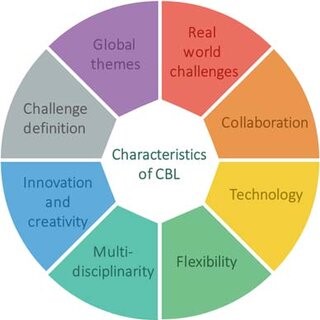
Figure 1. Characteristics of Challenge-Based Learning. Source: Gallagher and Savage (2020).
Read more
Challenge-based learning
Challenge-based learning (CBL) is a growing approach in higher education and has been promoted as a means for students to align the acquisition of disciplinary knowledge with the development of transversal competencies while working on authentic and sociotechnical societal problems (Nichols and Cator Citation2008; Nichols, Cator, and Torres Citation2016). This flexible approach frames learning with challenges using multidisciplinary actors, technology enhanced learning, multi-stakeholder collaboration and an authentic, real-world focus (Gallagher & Savage, 2020).
Activity plan
The Professional Development Team of the CHARM-EU Alliance developed an activity plan to introduce teaching staff to challenge-based learning. This activity plan consists of a lesson plan and additional slides that can be used to host a similar workshop in your own university or alliance.
Learning objectives
After this session, participants are able to:
- Gain a thorough understanding of the CBL framework and its application, including the benefits of using CBL in higher education.
- Develop skills in linking up their educational programme with real-world challenges.
- Integrate CBL principles into their teaching practices, leading to improved student engagement, critical thinking, and overall learning outcomes.
- Facilitating CBL, including creating a supportive learning environment and providing guidance and feedback for the students.
- Collaborate with colleagues from different disciplinary and implement Transdisciplinarity into their CBL projects.
The materials include two workshops. The sessions explore CBL principles and frameworks while offering hands-on activities that allow participants to directly apply the concepts. Throughout the workshops, participants will engage in group discussions, individual exercises, and collaborative tasks. They will gain insight into best practices for integrating CBL into their own teaching.
SOMETHING FOR YOU TOO? CHECK OUT THESE RESOURCES!
WOULD YOU LIKE TO GET INVOLVED WITH THE TRANSNATIONAL ONLINE LEARNING INITIATIVE YOURSELF? SEE OUR GUIDES!
Are you interested in CHARM-EU’s activity plan on challenge-based learning? See our guides.
| Step | Action | Who should be involved | CHARM-EU supporting document |
|---|---|---|---|
| 1 | Get a general overview of challenge-based learning in higher education | Academic staff, support staff | See resources in the previous section incl. Gallager & Savage (2022) |
| 2 | Use activity plan to host a workshop in your own institution | Academic staff, support staff | See resources in the previous section incl. Gallager & Savage (2022) |
| 3 | Exchange case examples of your approach | Academic staff, support staff | Contact CHARM-EU support staff through the form below selecting ‘I would like to get local educational support/consultation‘. |